Provider Partnerships Expanding Certified Game Libraries Under Multi-Jurisdictional Oversight

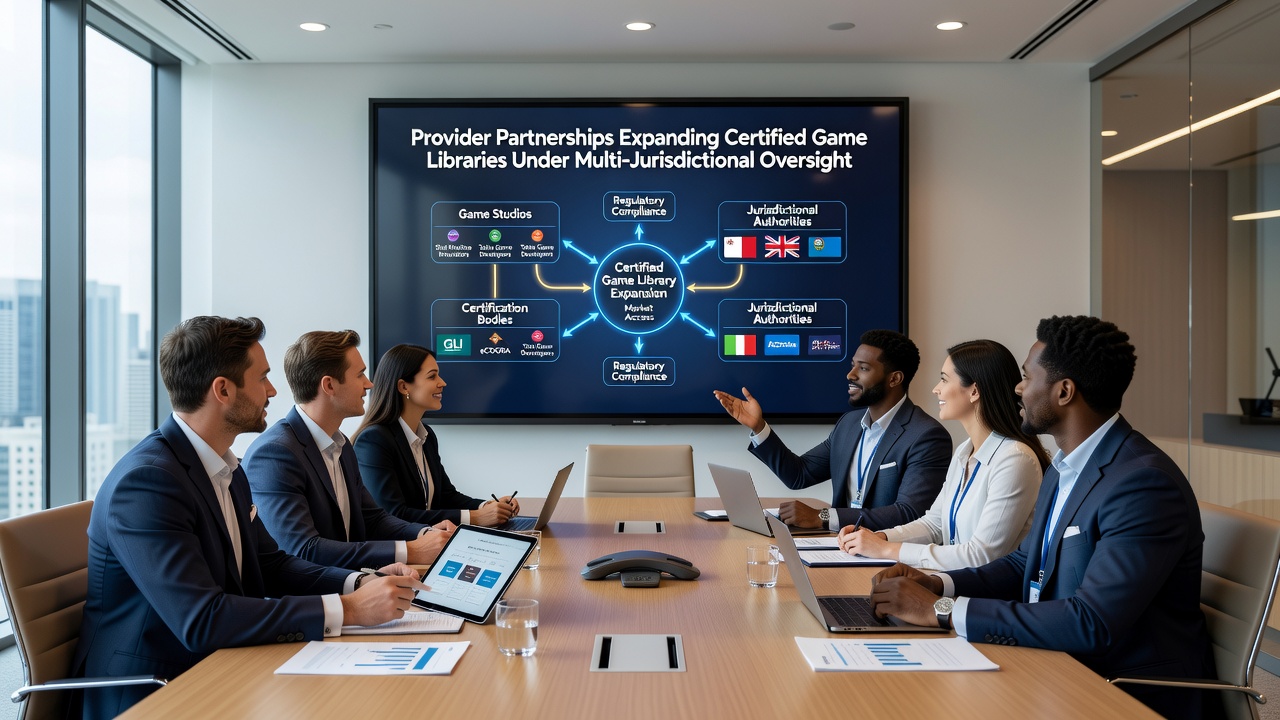
Provider partnerships have accelerated the growth of certified game libraries as operators navigate overlapping regulatory frameworks in multiple jurisdictions, and this trend continues to reshape how digital gaming content reaches players worldwide. Companies form alliances to pool development resources while ensuring each title meets technical standards required by bodies such as the Nevada Gaming Control Board and the Malta Gaming Authority, which allows a single game build to receive approvals across regions without repeated testing cycles.
Partnership Structures and Certification Pathways
Operators and software providers establish joint ventures that combine content creation with compliance expertise, and these arrangements often include shared testing protocols that align with standards from the Australian Communications and Media Authority alongside European directives. Data from the European Gaming and Betting Association shows that collaborative certifications reduced average approval times by 35 percent in markets that adopted mutual recognition agreements during 2025, and this efficiency has encouraged smaller studios to enter partnerships rather than pursue standalone licensing.
Multi-jurisdictional oversight requires providers to maintain audit trails that satisfy both state-level and supranational requirements, while partnerships distribute the administrative burden across teams located in different regulatory zones. One collaboration between a North American aggregator and an Asian content studio resulted in a library expansion that added 180 certified titles to platforms operating under both New Jersey Division of Gaming Enforcement rules and Singaporean remote gaming regulations.
Expansion of Certified Libraries in Practice
Certified libraries grow when partners align on RNG verification, game mathematics, and responsible gaming features, and these alignments allow operators to launch identical titles simultaneously in several markets. Research conducted by the University of Nevada, Reno gaming laboratory indicates that partnership-driven libraries increased by an average of 42 percent year-over-year in jurisdictions that permit cross-border data sharing for compliance purposes.
Take one aggregator that integrated slot mechanics from three independent developers under a single certification umbrella, and the resulting catalog now serves operators in Canada, Australia, and several European Union member states without requiring separate builds for each region. Such models rely on centralized quality assurance teams that coordinate with regulators through secure portals, which reduces duplication while preserving each authority's ability to request jurisdiction-specific modifications.
Regulatory Developments Effective July 2026
Beginning in July 2026, several jurisdictions plan to implement updated technical standards that emphasize interoperability between certified systems, and these changes are expected to further incentivize provider partnerships. Regulators in both the United States and the Asia-Pacific region have signaled support for frameworks that allow certified games to transition between markets under pre-approved conditions, provided ongoing monitoring reports remain accessible to all participating authorities.
Partnership agreements increasingly include clauses that address data localization and audit access, and these provisions help maintain compliance when new rules take effect. Figures released by the International Association of Gaming Regulators reveal that 28 multi-jurisdictional memoranda of understanding were signed in the first half of 2026 alone, each addressing certification reciprocity and shared enforcement mechanisms.
Operational Impacts on Operators and Providers
Operators benefit from expanded libraries because they can offer players more variety without managing separate certification processes for every jurisdiction, while providers gain access to larger distribution networks through shared compliance costs. Partnerships also facilitate rapid updates to existing titles when regulatory changes occur, because joint teams can implement modifications once and apply them across all approved markets.
Yet coordination challenges persist when jurisdictions maintain differing requirements for player protection tools or payout reporting, and successful partnerships address these differences through modular code structures that allow selective feature activation. Observers note that libraries built under such arrangements demonstrate higher consistency in technical performance across devices and platforms.
Conclusion
Provider partnerships continue to expand certified game libraries by aligning development and compliance efforts under multi-jurisdictional oversight, and the framework established for July 2026 builds upon existing agreements to support further growth. Regulators and industry participants maintain separate verification processes while sharing information that reduces redundancy, which allows certified content to reach additional markets efficiently. The pattern established through these collaborations shows how coordinated oversight can accommodate both regulatory independence and operational scale.